Mushroom Mylar Bags vs Regular Packaging: Which Is Better?
Before we compare the two, let's break them down in simpler terms.
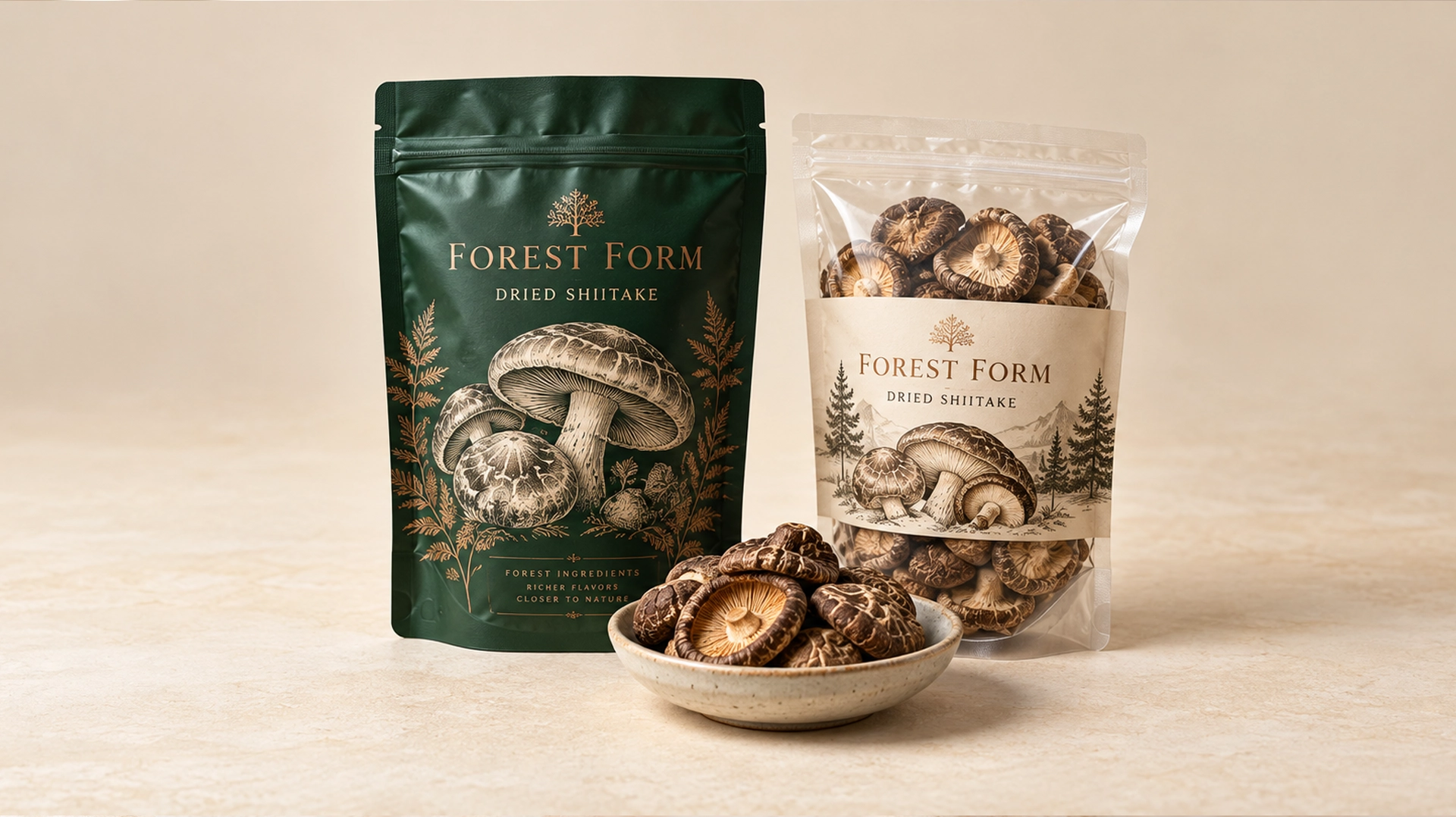
Mushroom Mylar bags are special bags made from a strong film called Mylar.
Most of the time, they have:
A tough outer plastic layer.
A shiny barrier layer (like aluminum foil).
And an inner layer that seals tight with heat.
They are designed to keep out air, water, light, and strong smells. Many businesses use them as “smell‑proof” mushroom bags with custom printing.
Regular packaging that we will discuss and compare mushroom mylar bags in this article means:
Thin plastic bags and simple poly pouches.
Basic zip‑lock bags.
Simple paper pouches, and basic plastic or glass containers used without extra barrier help.
These regular options are common because they are cheap and easy. But they do not protect mushrooms as well as Mushroom Mylar bags, especially over time.
The Core Purpose: What Good Packaging Must Do for Mushrooms
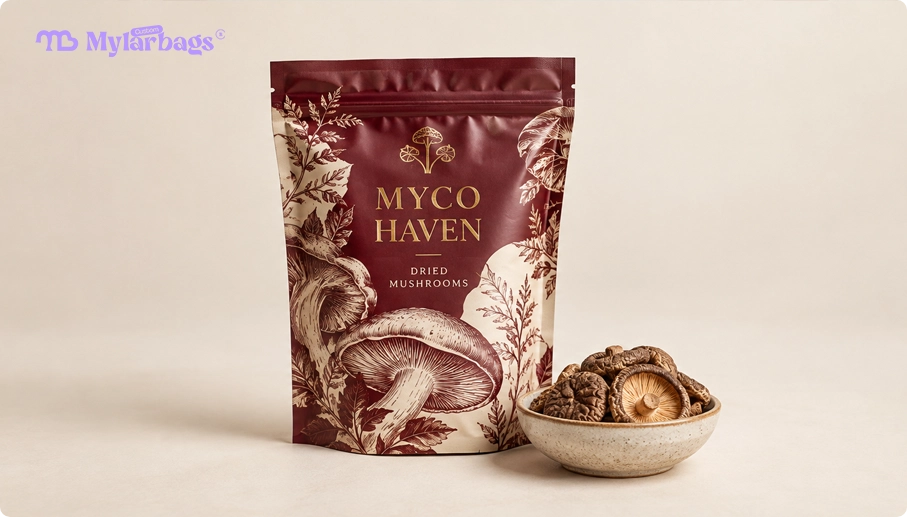
Good mushroom packaging has one main job. And that is to protect what is packed inside. This means that it must:
Maintain quality
The mushroom must stay intact the way they were at the time of packing.Keep potency
The active compounds, flavor molecules, and other good parts should stay strong, not quickly fade.Safe keep the product
The bags should keep out moisture and air. These elements can influence mold growth and spoilage.Stay intact
The mylar bag shouldn’t get torn and keep its structure during stacking, moving, and shipping.
Mushroom Mylar bags are built specifically around these purposes.
How Mushroom Mylar Bags Are Made
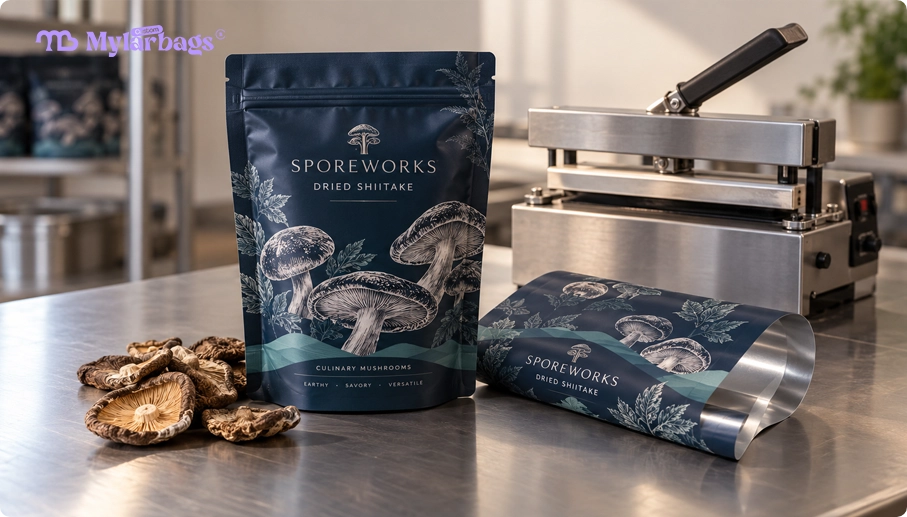
Mushroom Mylar bags use several layers that work together:
PET outer layer
This is a tough plastic film that gives strength and a good surface for printing.Aluminum or metalized barrier layer
This thin layer is what makes Mylar material so special. It blocks out external factors better than plastic.
Because of this structure, Mylar bags:
Have a low oxygen transmission rate (OTR), so very little air can get in.
Have a low moisture transmission rate, so moisture cannot seep in.
Block light, which protects sensitive compounds.
Are puncture‑and-tear resistant.
What “Regular Packaging” Looks Like for Mushrooms
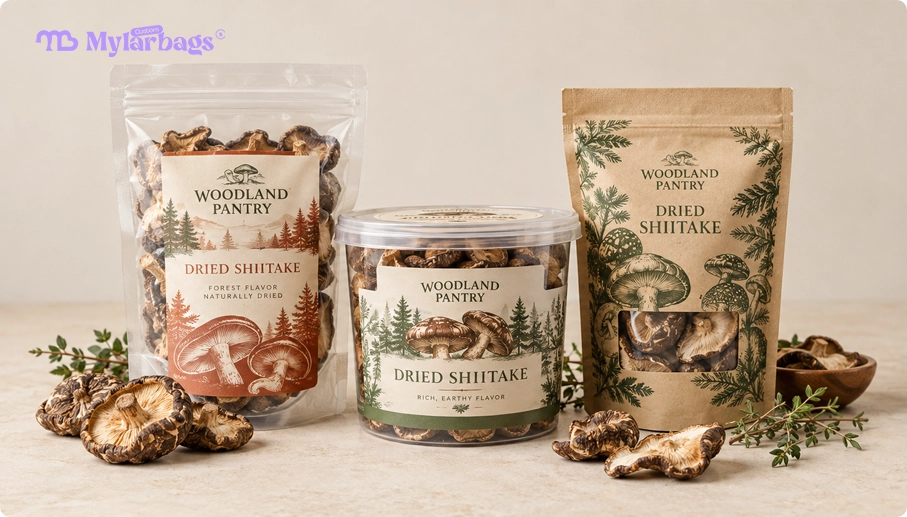
Regular mushroom packaging can look like:
Clear or colored zip‑lock bags.
Thin bags closed with twist ties or heat.
Paper pouches with or without lining.
Glass jars or plastic containers with lids.
These options have some good points:
They are cheap.
They are easy to find in many shops.
They can be fine for short‑term local use.
But they have weak spots:
Thin plastic and pouches let in more air and moisture.
Clear materials let in light.
Simple bags do not always smell‑proof.
Glass jars are stronger than thin bags but still:
Let in light unless tinted or stored in the dark.
Take up more space.
It costs more to ship because they are heavy and can break.
Freshness: Mylar vs Regular Packaging
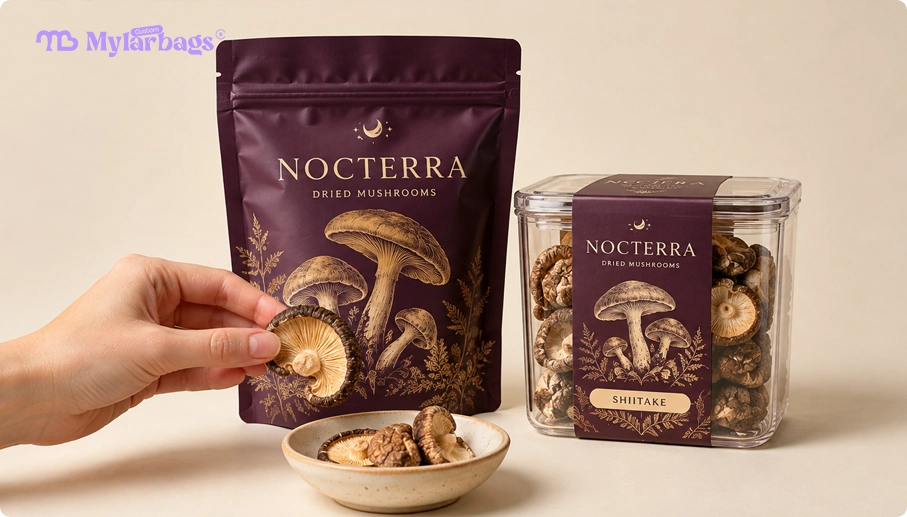
Freshness falls when mushrooms get air, water, and light. Let’s see how each option handles that.
Mushroom Mylar bags
Air (oxygen)
The metalized layer of mylar blocks oxygen from entering the packaging. Print247’s mylar bags extend the shelf life of dry foods like dried mushrooms better than normal plastic or jars.Moisture
Mylar keeps moisture out. This way you dried mushrooms stay quality intact and safe.Light
Mushroom Mylar bags block light, including UV rays, that can fade color and harm nutrients and other compounds in mushrooms.
Regular packaging
Air and moisture
Thin plastic bags and normal pouches allow more air and water vapor to pass over time. Packaging comparisons show that standard plastic bags and containers are fine for short‑term storage but are less effective for long‑term quality.Light
Clear bags and jars let light in. This light can speed up color loss and general quality decline.
So, for keeping mushrooms fresh over weeks and months, especially dried mushrooms, Mylar bags clearly do a better job than regular packaging.
Potency and Smell: Mylar vs Regular Packaging
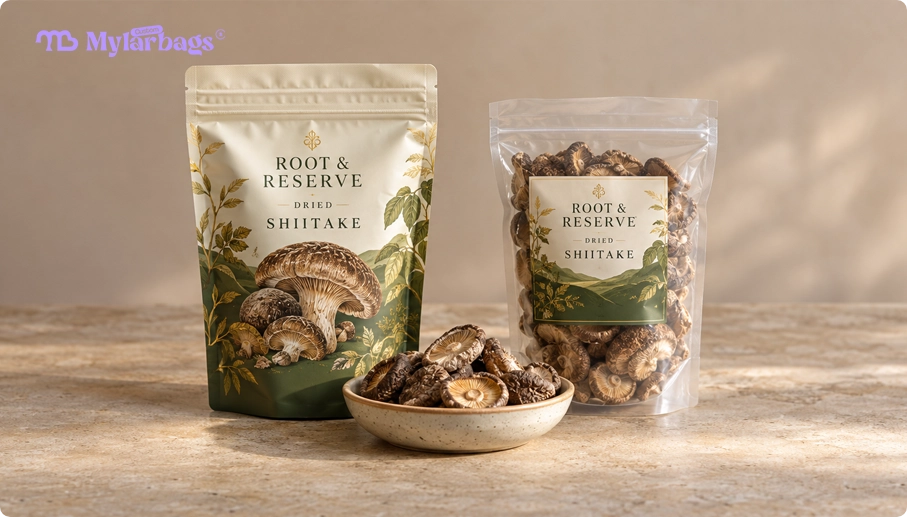
For many mushroom products, potency matters a lot. This includes culinary mushrooms, functional powders, and other mushroom‑based goods.
Mylar bags retain the potency of mushrooms to maximum extent as they let low oxygen and little to no light seep in. Due to this, mushroom brands pick mylar bags over regular packaging.
Mushrooms have a strong scent, so having a packaging that prevents that odor from leaking is an ideal choice. Mylar bags are usually considered a smell proof packaging as it doesn’t let the aroma of mushrooms to leak.
In short, if you care about potency and smell control, Mylar bags are the winner compared to regular packaging.
Safety, Durability, and Real‑World Handling
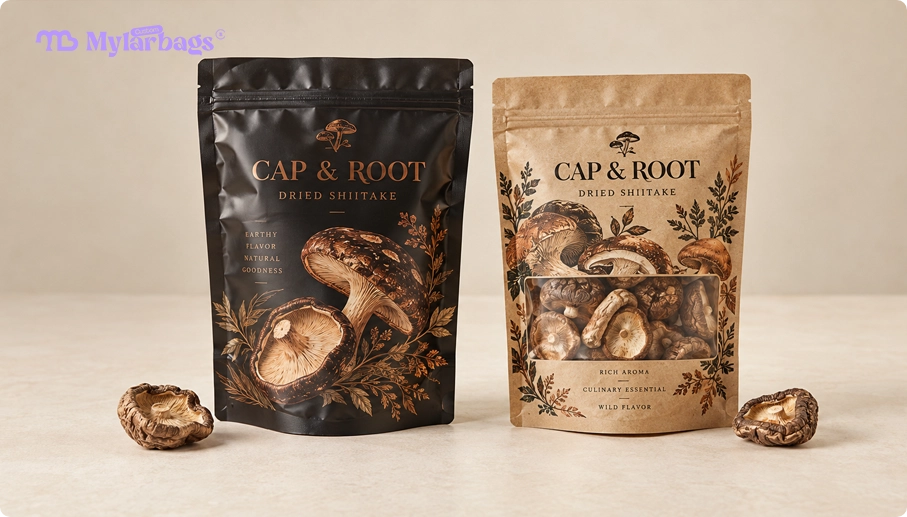
Mushroom packaging must also survive real life situations. Like when it is packed in boxes for shipping, displayed on shelves, dropped accidently, and rough handling.
Lets have a look below how mushroom mylar bags win against regular packaging.
Mushroom Mylar bags
Puncture and tear resistance
Mylar bags used for mushroom packaging are made to resist punctures and tears, which is crucial for long‑term mushroom storage.Child‑resistant and tamper‑evident designs
Many Mushroom Mylar options can be made child‑resistant or tamper‑evident with special zips and seals, especially for regulated or sensitive products.Space and weight
They are light in weight and ship flat. Thus they occupy less space and cost less to ship.
Regular packaging
Thin bags can tear if pressed or scratched during shipping.
Jars are durable but they are high in weight. Plus they can break when dropped.
For safety and durability, Mylar is usually the safer choice.
Mushroom Mylar Bags vs Regular Packaging
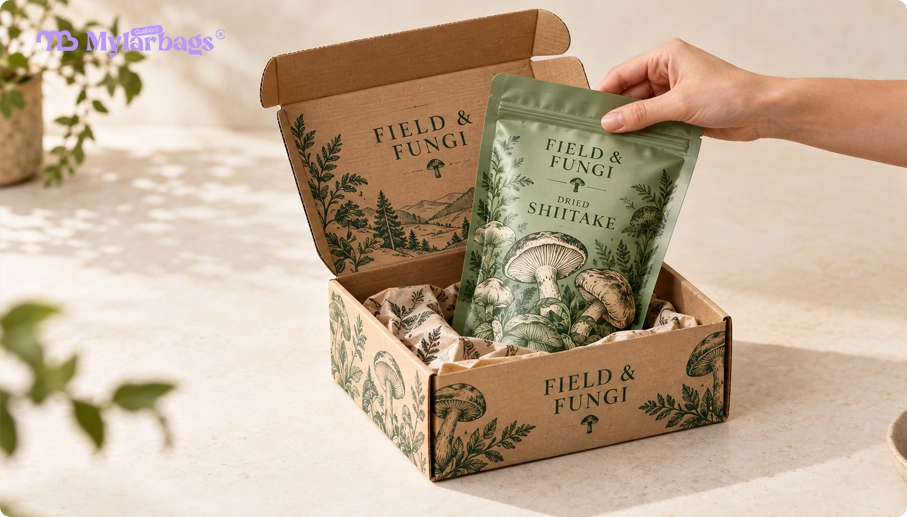
Feature / need | Mushroom Mylar bags | Regular packaging (thin bags, basic pouches, jars) |
Barrier to oxygen | A metalized layer keeps most oxygen out when sealed properly. | Much weaker; air can slowly enter through film or seams. |
Barrier to moisture | Excellent moisture barrier; protects dried mushrooms from getting wet. | Limited to moderate barrier; moisture can seep in and soften the product. |
Light protection | Opaque or foil films block light and UV, slowing color and quality loss. | Clear bags/jars let light in unless extra steps are taken. |
Freshness over time | Keeps smell, taste, and texture stable for much longer with proper drying and sealing. | Freshness drops sooner; higher risk of staleness or mold. |
Potency of actives | Low oxygen and no light help active compounds stay stronger for longer. | Faster breakdown of actives due to air and light exposure. |
Odor control | High; designed to lock in strong mushroom odors and block outside smells. | Low to medium; smells leak out or over time. |
Strength in shipping | Thick film resists punctures and tears in transit. | Thin bags tear easier; jars can crack or shatter if dropped. |
Branding & safety options | Easy to custom print, add child‑resistant zips, and tamper‑evident features. | Limited print and usually few or no advanced safety features. |
Unit cost | Higher than basic bags but lower than jars; often pays off with less spoilage. | Very cheap per bag, but more product loss over time. |
Storage & shipping space | Flat and light; very space‑efficient and cheaper to ship than jars. | Bags are compact; jars take more room and add weight. |
Which Is Better for Mushrooms?
For dried mushrooms and other mushroom products, Mylar bags are the better choice.
They are suitable to:
Keep environmental factors out.
Maintain quality.
Keep potency.
On the other hand, regular packaging still has its own place for short‑term uses, but mushroom Mylar bags are the go to choice.
Choose high‑barrier Mushroom Mylar bags from a specialist like Custom Mylar Bags, match them to your product sizes, and lock in packaging that actually protects your hard work instead of putting it at risk.
Give our experts a call or fill out our order form to get yours now.
FAQs
Why are Mushroom Mylar bags better than regular plastic bags for mushrooms?
The reasons are quite clear and without any doubt. Mylar bags block oxygen, moisture, and light much better than thin plastic or glass containers. They help to keep the mushrooms fresh and more potent for long durations. Regular plastic bags are fine for short‑term use but allow more air and water in over time.
Are glass jars better than Mylar bags for mushrooms?
Glass jars can be airtight to some extent, but they let in light unless they’re tinted or stored in the dark space. Plus they take up more space and weight. On the other hand, Mylar bags are best known to combine moisture, oxygen, and light barriers in a flexible pack, so they are usually better for long‑term storage of dried mushrooms.
Do I always need oxygen absorbers with Mushroom Mylar bags?
For long‑term storage of dried mushrooms, oxygen absorbers are highly recommended because they pull out leftover oxygen inside the sealed bag. For short‑term use, Mylar alone still helps, but absorbers give extra protection.
Are Mushroom Mylar bags more expensive?
Yes, per bag they cost more than thin plastic, but they reduce spoilage, keep products stable for longer, and are cheaper and lighter than jars. Over time, many brands find they save money overall.

Sophia Bennett
Sophia Bennett is a flexible packaging consultant and content contributor at Custom Mylar Bags. With years of experience in packaging materials, printing techniques, and product protection, she writes about Mylar bag innovations, custom packaging trends, and practical solutions that help businesses improve product safety, freshness, and brand presentation.
Up Next