How to Choose Pet Food Bags That Keep Kibble Fresh to the Last Scoop
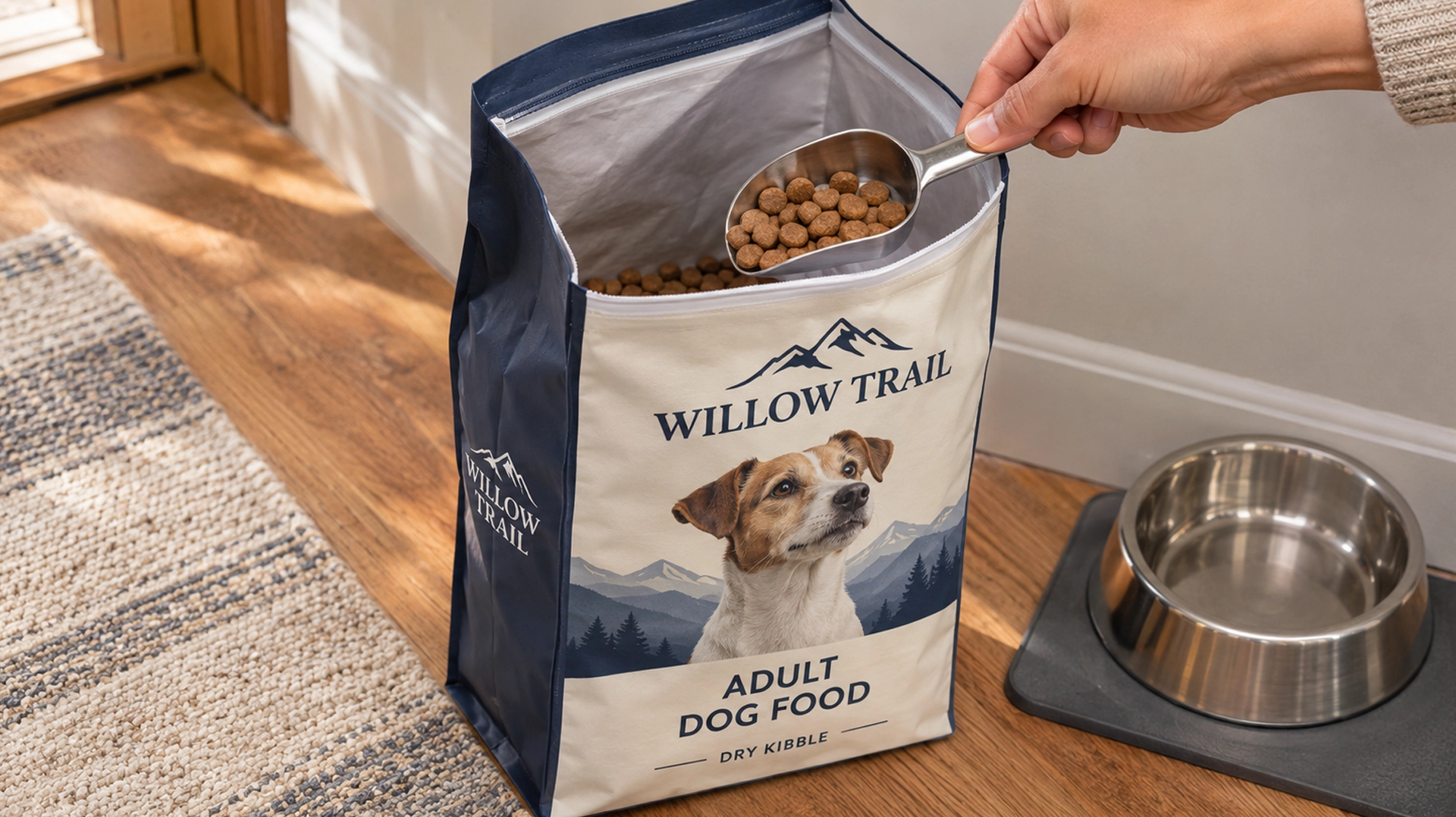
The best way to store dry pet foods is to seal them in a bag that limits oxygen exposure and keep them in a cool, dry place, noting the bag's lot number for traceability. Kibble is fat-coated, and when the bag opens, oxygen, moisture, and light can cause product degradation. This also causes the fat to oxidize and turn rancid long before the food looks spoiled.
Selecting the suitable pet food bags is one of the biggest decisions a business has to make. The bag choice affects how your products perform on the shelf and how it keeps your dry goods safe. There are five decisions that businesses must make carefully so their products look appealing while staying fresh:
Bag styles
Bag size
Barrier properties
Closure options
Printing
This detailed guide will walk you through the right pick for your pet food packaging that actually fits your product, your budget, and your business requirements.
Why Does Kibble Go Stale?
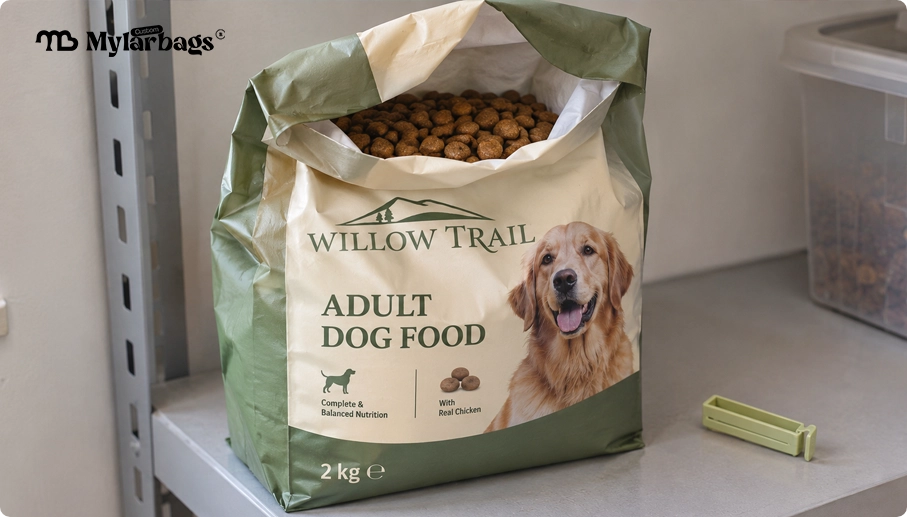 It's always a smart choice to start with your products and learn what makes them go stale.
Before you look at the bag, look at what is actually going on with your product and what causes it to go rancid. Different food items have different needs. Each product has its own properties and requires packaging solutions made for it. Therefore, you must answer the following questions before choosing packaging for your products:
Is the product dry or wet?
What’s the product weight?
Is the product moisture sensitive?
Does it have an aroma?
How long does it need to stay fresh?
Dry pet food and treats perform best in a strong, resealable pouch. These pouches are engineered to block moisture, air, and light. Greasy pet food items need high-barrier packaging so that oils do not go rancid. The main reasons for kibble going stale:
Fat oxidation
Heat and light
Loss of aromas
Humidity and moisture
Quality kibble packaging plays a key part in preserving freshness. External factors such as moisture can cause mold and bacterial growth on kibble, which can lead to mycotoxins such as aflatoxin. Therefore, choosing the right pet food bags matters more than many businesses realize.
How to Select the Right Pet Food Bag
Here’s how you can pick pet food packaging bags that work for your brand:
Barrier Films and Durable Bag Material
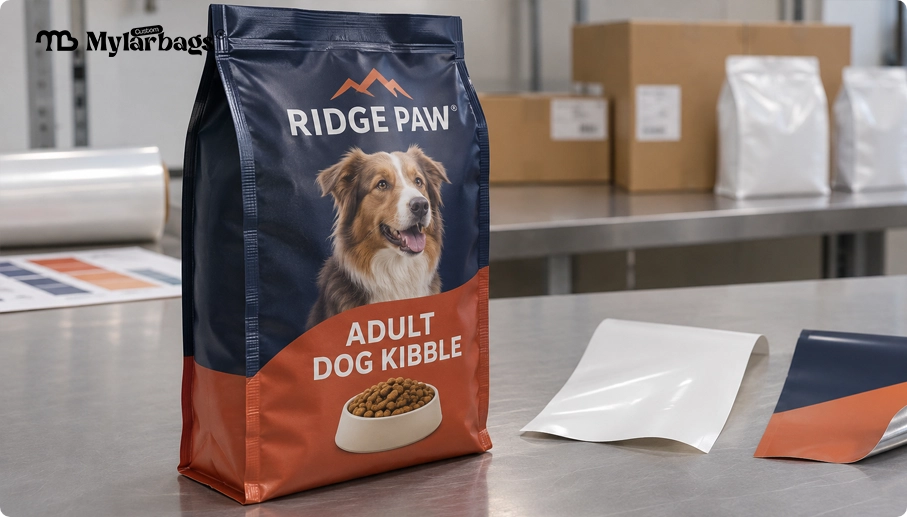 The materials determine how well the bag works to keep your products safe. A multi-layer structure slows the oxygen that turns kibble fat rancid, and slows moisture pickup.
Here are some of the most common options when it comes to material choice:
Plastic (PE/PP): This material is simple and affordable. It's an effective choice for most dry pet products. It helps block moisture from degrading the kibble and treats.
Aluminum foil laminate: This is the gold standard in the flexible packaging industry. It helps block moisture, oxygen, and light, and protects products from unpleasant odors. Since kibble is moisture-sensitive, this laminate provides maximum protection.
Mylar: Mylar (BoPET) is the polyester film the other structures are built on. On its own it gives you strength and a print surface; the barrier comes from the metallized or foil layer laminated to it.
Kraft paper: Kraft gives you a natural look, and it needs a laminated moisture barrier for pet food. That laminate takes the structure out of the compostable and recyclable streams.
These materials offer a range of barrier properties and work for different kinds of pet food items:
Barrier Level | Typical Structure | Ideal For | Considerations |
Standard | PET/PE or paper/PE laminate | Dry biscuits | Less costly but offers less protection against oxygen |
High | Metallized PET or foil laminate | Dry kibble and fatty treats | Provides protection against oxygen, moisture, and light |
Extra high | Foil or multi-layer | Freeze-dried raw | Highest protection and usually costs more |
Pick the Best Bag Style
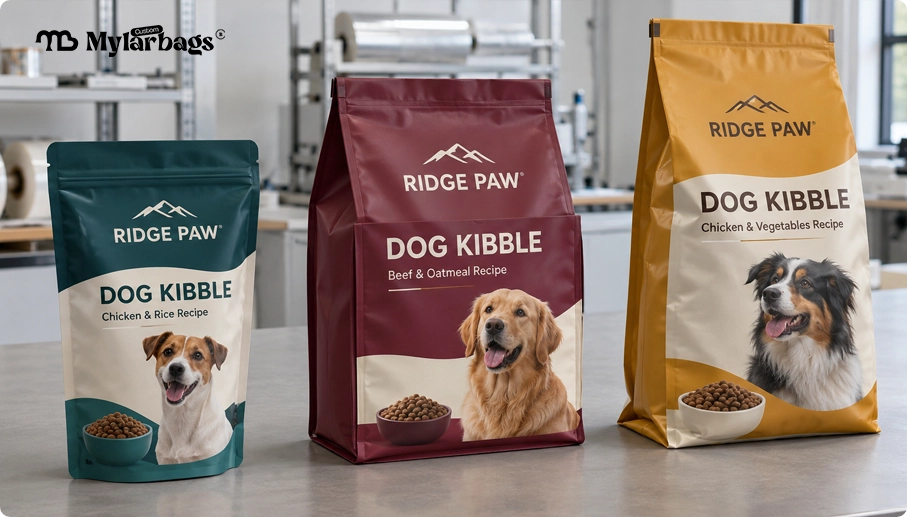 Once you understand the product properly and choose the ideal material for it, the next step is to pick a bag style that maximizes your product’s shelf appeal.
The style of the bag determines how your product looks on retail shelves, how it stands, and how easy it is for buyers to use. There’s no single best choice when it comes to picking the ideal bag style. Businesses should consider their product and business needs first and then make the optimal choice.
Here are some of the top bag styles pet brands can choose depending on these specific needs:
Stand-up pouches: This is the most popular packaging format for pet food and treats. These pouches are engineered to stand upright on retail shelves. They look professional and work best with different closure options. They are available in various sizes and can be customized according to a brand’s specific needs.
Flat bottom pouches: These custom pet food mylar bags provide five printable panels. These bags are designed to sit flat on shelves. They work best for heavier products and look stable on shelves by evenly distributing the weight across the pouch. Businesses can also add resealable zippers in these pouches so the bag can be used multiple times without compromising product quality.
Pinch / fold-over bottom: It's a specialized flexible packaging solution that is widely used for medium-to-large pet food items. It features a pinched bottom that creates a square-like base. This allows them to pack tightly and stack efficiently.
Quad seal bags: These bags are built with four corner seals. They provide a sturdy and brick-like shape. They can hold heavy fills securely while presenting your products professionally and cleanly on retail shelves.
Choose from these bag styles and make your products look appealing on the highly competitive retail shelves.
Getting the Right Bag Size
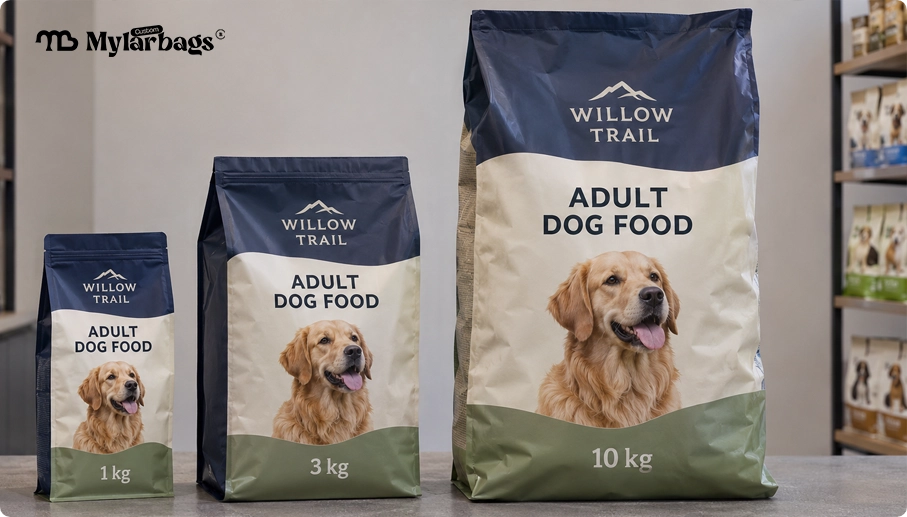 Matching the cat or dog food bag sizes to your product requirements is very important. Here are some of the most common bag sizes for pet food packaging.
Retail Size | Use Cases | Recommended Structure | Key Spec Notes |
1 to 5 lb | Trial or treats | Stand-up pouch and flat bottom | Zipper, tear notch, and an optional window |
6 to 15 lb | Everyday retail and e-commerce standard | Flat bottom and quad seal | Zipper, hang hole, or handle; includes high-barrier film |
16 to 30 lb | Best for multi-dog and value packs | Side gusset, flat bottom, and pinch/fold-over bottom | Strong seals, handle, slider, or heavy-duty zipper |
31 to 45 lb | Bulk and large size | Side gusset and pinch/fold-over bottom | Puncture-resistant laminate and easy-open top |
Closure Options and Features That Maintain Product Freshness
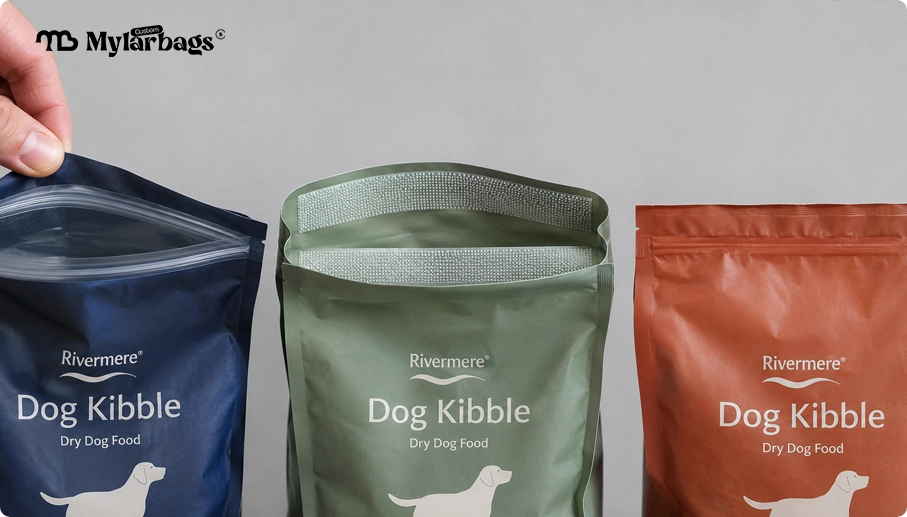 Effective pet food storage always relies on specific closures and features that help protect your products against environmental factors. These features play a key role in preserving flavor and nutritional integrity.
The following are some of the most preferred closure options and special features that are used by most businesses in the USA:
Press-to-close zipper: This is the most used closure option for small to medium-sized bags. It makes the bag simple to close and helps keep air and moisture out.
Slider closure: It’s a convenient reclosable option that works for different product needs. It also plays a critical role in maintaining product freshness.
Heat seal: This closure option works perfectly well for single-use products that are meant to be consumed quickly. It offers a tight barrier against environmental factors.
Tear notch and zipper: This also helps maintain product freshness for longer. The bag is heat-sealed above the zipper, which can be torn away by customers.
Degassing valve: This feature lets built-up gas escape without letting outside air in. It's mainly used for freeze-dried raw or fermented pet foods that are off-gas; standard kibble does not typically need it.
Handle or hang holes: Businesses can add this feature for easy carrying and retail merchandising.
Clear windows: This feature can be used in kibble packaging to show customers the food. It helps build trust among your consumers and can be used for premium pet food products.
Printing and Labeling
Printing is where your packaging does double duty. It helps build shelf appeal and it carries the information regulators require. Most bag styles support multi-color flexographic or digital printing, so artwork, pet images, and brand colors print cleanly across the full pouch.
Guaranteed analysis
Ingredient list
Nutritional adequacy statement
Feeding directions
Net weight
Manufacturer's name and address
Facilities that manufacture or pack pet food also need to register with the FDA. Build these panels into your bag layout early so the design doesn't have to be reworked once the compliance copy comes in.
Choose a US Pet Food Packaging Supplier
Businesses should make the right decision when it comes to choosing a pet food packaging supplier. There are a few things to consider before making your decision:
You need to make sure your packaging supplier uses compliant and non-toxic materials.
Check if the packaging can protect your kibble and other pet food items from external factors.
You need to confirm if the packaging is durable and puncture-resistant.
Check whether the supplier offers full customization and printing opportunities.
Ask for their lead times and production times.
Custom Mylar Bags offers fast lead times and works to deliver high-quality packaging that meets your specific product needs. We offer complete customization. Businesses can customize every aspect of their packaging so it reflects their unique identity. Talk to our packaging team about your kibble bag specs and start your manufacturing process.
Final Thoughts
The right pet food packaging protects your products and reflects your brand. Start with your food type, then choose the ideal packaging materials and bag style that help sell your products. Select high-barrier packaging that keeps your pet food items fresh for a long time. Add unique packaging features so the bag can be used multiple times without affecting product quality.
Make the right decisions to preserve product freshness for longer and choose the packaging partner who understands what you truly need. Reach out to Custom Mylar Bags and get a quote depending on your specific product requirements.
FAQs
How can I store my pet food to keep it fresh?
A sealed high-barrier pouch slows moisture and oxygen. For pest control, store sealed bags in a closed bin.
Can pet food pouches be customized with my branding elements?
Yes, they can be fully customized and printed with your unique branding elements according to your specific requirements.
Are mylar bags safe for direct pet food contact?
The inner layer is food-contact polyethylene and meets FDA requirements for animal food contact. We supply compliance certificates and material data sheets.
How to keep dry dog food fresh after opening?
Keep the kibble in its original bag, roll the top down and close the zipper. The bag has the barrier and the lot code. Put the whole bag in a bin if pests or crushing are a concern.

Sophia Bennett
Sophia Bennett is a flexible packaging consultant and content contributor at Custom Mylar Bags. With years of experience in packaging materials, printing techniques, and product protection, she writes about Mylar bag innovations, custom packaging trends, and practical solutions that help businesses improve product safety, freshness, and brand presentation.
Up Next