How Protein Powder Mylar Bags Keep Whey Fresh After Opening
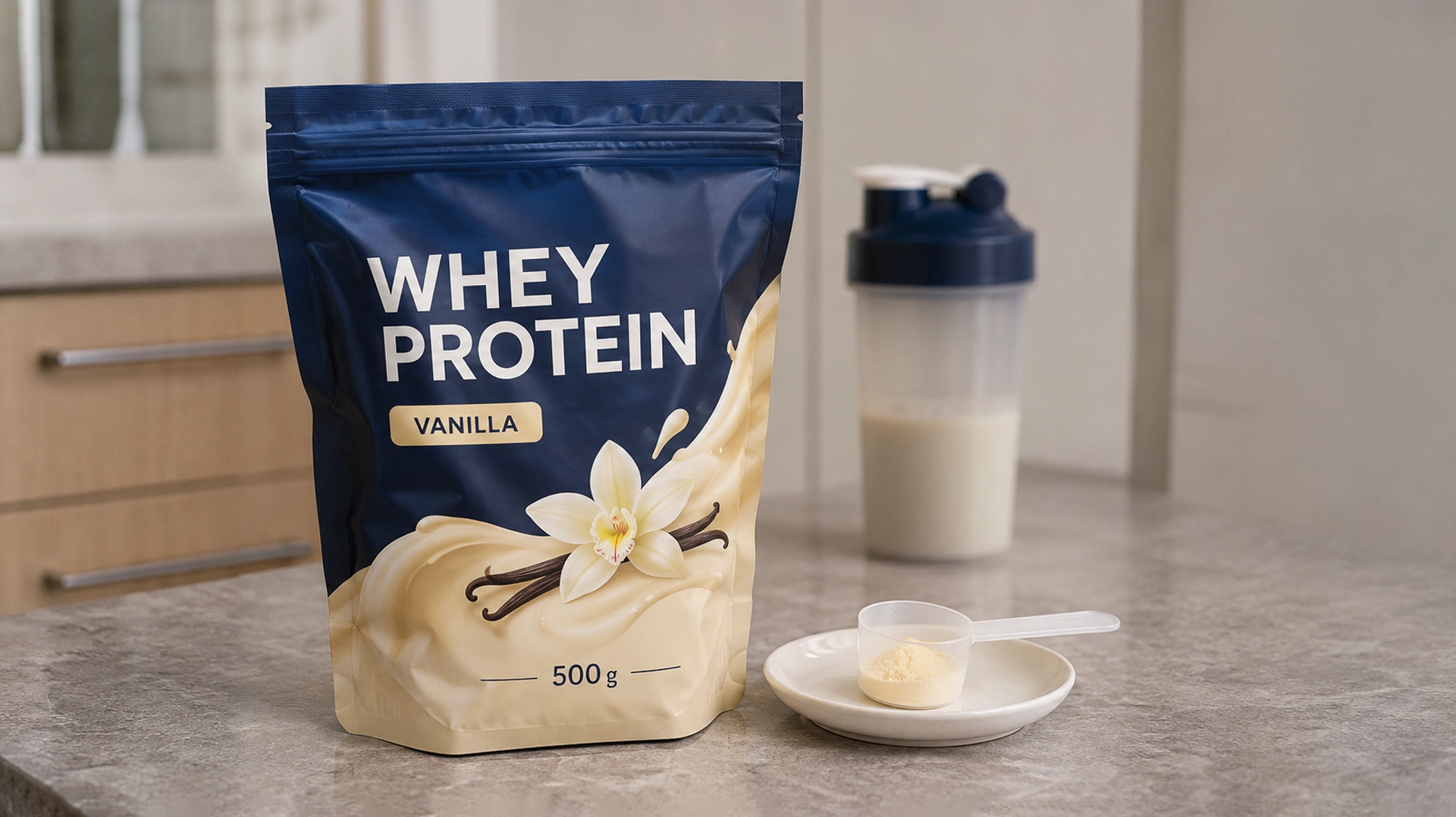
Mylar bags keep open whey protein fresh by blocking moisture, oxygen, and light. Protein powder mylar bags feature dense polyester and metallized layers that work as a strong shield against external factors. Once the bag is opened, whey can stay fresh for 3 to 6 months when stored well.
Whey protein gradually loses flavor intensity, mixability, and quality when exposed to moisture, heat, light, and air over time. Whey leaves your facility protected, but customers open it, scoop from it, and reclose it many times. Packaging is what protects the product quality and maintains freshness after the seal is broken.
Whey is a low-moisture dairy powder which requires packaging that prevents exposure to humidity and air. It helps slow down clumping, off-flavors, and nutrient loss once the factory seal is torn off.
Metallized or foil layers carry the moisture and oxygen barrier in Mylar bags, while the outer BoPET layer provides structural strength and a clean print surface.
In this article, we will explain how protein powder mylar bags keep whey fresh and how long protein powder lasts.
What Happens to Whey After the First Open
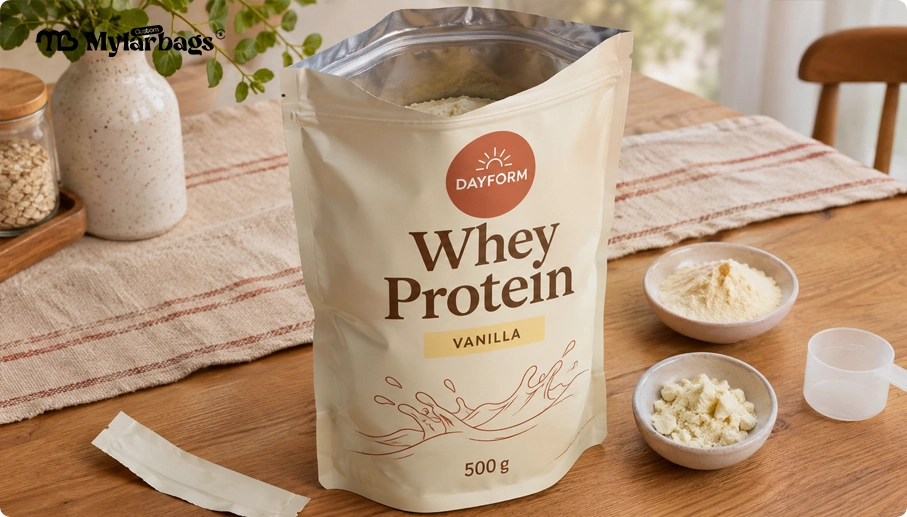
Once the bag is opened, whey protein powder's shelf life and quality begin to change. This happens because of exposure to air, ambient humidity, and potential contamination. Whey is hygroscopic, so humidity causes caking, clumping, and degradation.
Once the bag is opened, whey should be used within 3 to 6 months for better taste, solubility, and nutrient potency. Even high-quality protein powder can lose its properties over time. These changes happen through different pathways: oxidation and flavor loss affect taste, moisture causes clumping, and prolonged storage can reduce solubility along with minor lysine loss. The most common changes involve:
Loss of flavor: Flavors and sweeteners can lose their intensity over time.
Decline in nutritional value: The amino acid profile of protein can change during prolonged storage.
Clumping: Moisture causes the powder to clump.
It is important to store protein powder in airtight packaging in a cool, dry place. That way, you can prevent product degradation. The following are the main threats that cause the product to lose its freshness. Here’s what the pouch must do to prevent it:
Threat | Effect on whey | Packaging response |
Oxygen | Oxidation, stale or off flavor, nutrient loss | Low OTR metallized or foil barrier layer |
Moisture or humidity | Clumping, caking, discoloration | Low MVTR film. A reliable zipper and heat seal |
Light | Color and flavor degradation | Opaque, metallized laminate |
Repeated opening | Cumulative air and humidity exposure | Press-to-close zipper rated for repeated use; scoop-friendly opening |
Why a Protein Pouch With Zipper Matters After Opening
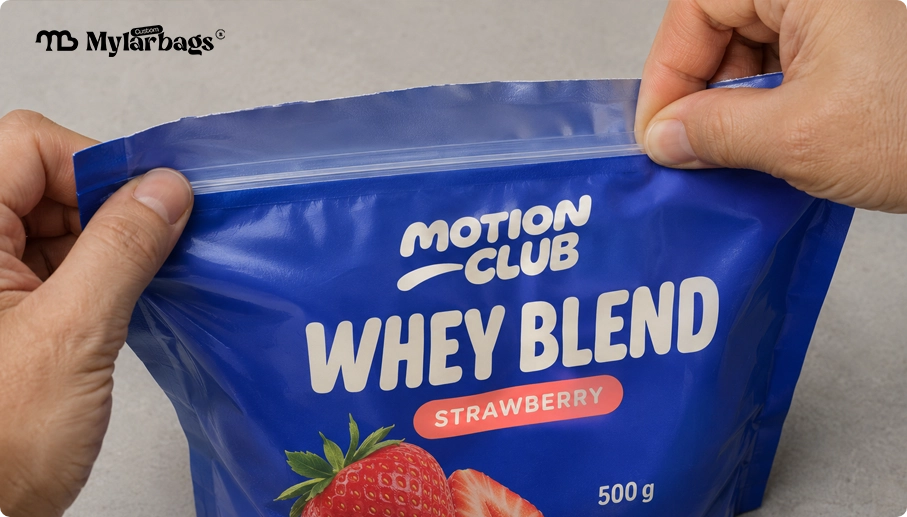
A protein pouch with a zipper matters once the bag is opened. It helps provide a moisture and oxygen barrier that prevents powder from clumping and losing its flavor. A resealable zipper allows consumers to press out excess air before sealing to keep the remaining powder fresh.
Here are the key benefits of using a resealable zipper after opening the bag:
The zipper helps block moisture and clumping.
It helps preserve freshness and nutrients.
Flexible pouches allow you to squeeze out trapped air before zipping shut.
The reliable closure keeps fine powder contained during storage.
The key to maintaining freshness for a long time is to securely seal the pouch. Keeping the powder away from outside elements is key to maintaining the product's integrity.
How Protein Powder Mylar Bags Maintain Freshness?
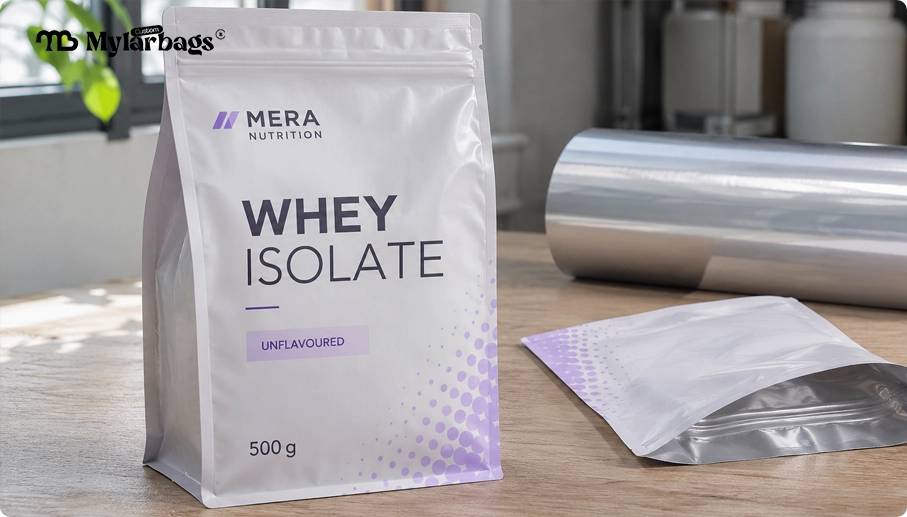
Protein powder mylar bags are engineered to maintain freshness by combining a dense polyester and metallized film structure. They feature a strong heat seal and a resealable zipper that help slow air, moisture, and odor transfer once opened.
Here’s how protein powder mylar bags maintain freshness:
The metallized or foil barrier layers slow water vapor transmission inside the bag, helping reduce clumping and degradation.
Mylar bags stop oxidation, which breaks down sensitive amino acids and bioactive compounds. Mylar bags' dense film layers restrict oxygen transmission.
The metallized layer blocks visible and UV light, helping slow light-induced degradation of colorants, flavors, and sensitive nutrients.
The multi-layer structure stops outside chemical smells, humidity, or other odors from seeping into the powder.
Mylar pouches can be customized with a resealable zipper for repeated scooping and reclosing. Custom Mylar Bags make sure the packaging structure matches the supplement's formulation, storage conditions, and expected shelf life.
We have added a table below with common film structures for whey protein bags. Let's take a look at it:
Structure | Barrier level | Best for |
PET / VMPET / PE | High (metallized) | Core choice for protein powder mylar bags |
PET / AL / PE | Very high (foil) | Maximum shelf-life requirements; premium tubs-to-pouch conversions |
VMPET / PE | High (metallized) | Matte-finish retail brands |
PET / PE (clear or windowed) | Lower | Small windows or sample packs only; confirm barrier needs first |
Steps to Store Protein Powder for a Long Time
Take the following steps to store protein powder for the long term:
Pick a Heavy-Duty Mylar Bag
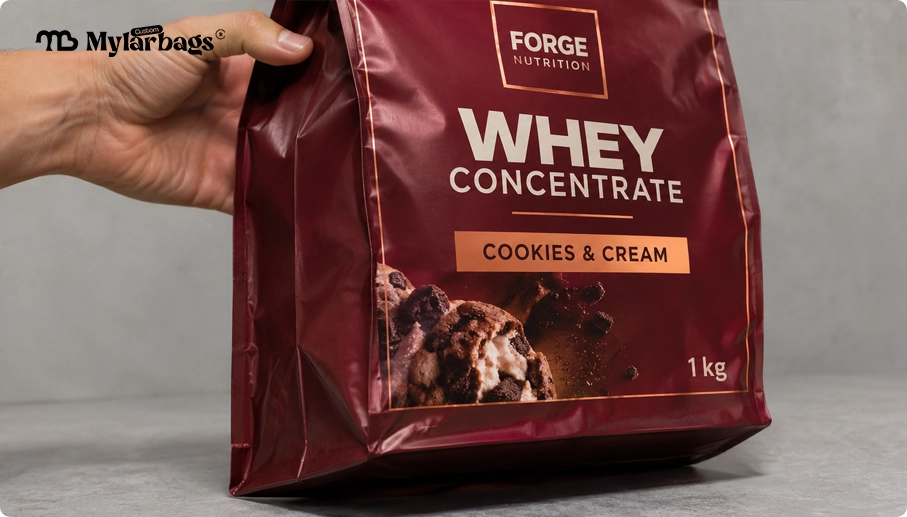
You need to choose a food-grade Mylar bag with optimal thickness. Make sure the bag resists punctures and blocks light, moisture, and oxygen. Make sure the powder is completely dry, and ensure your packaging line has the proper heat-sealing equipment and properly sized oxygen absorbers ready before filling begins.
Fill the Bag Without Overpacking
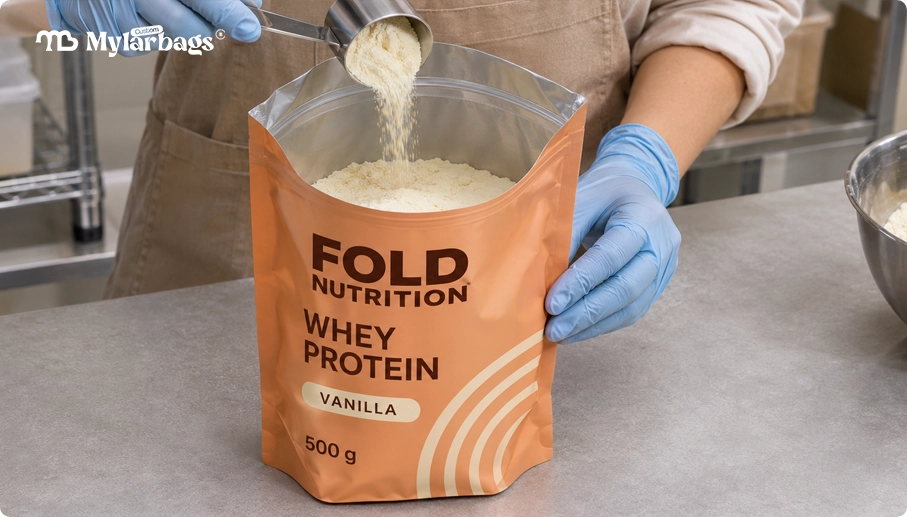
Pour the protein powder into the bag and tap it gently to make sure the product settles down. Leave 2 to 3 inches of clean headspace at the top of the pouch so the heat seal stays clear of the powder.
Wipe the Seal Zone Clean and Insert an Oxygen Absorber
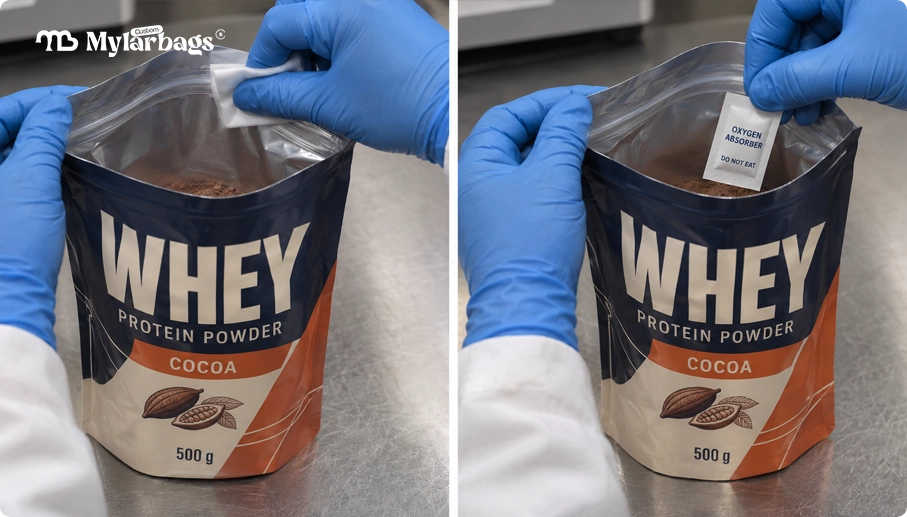
Businesses need to make sure to wipe the inside top edge clean before sealing. Fine protein powder trapped in the heat seal area can create microscopic leaks. This can cause outside air to enter the bag and contaminate the product. Place a properly sized oxygen absorber on top of the powder in the headspace and seal promptly.
Heat Seal and Press Out Air
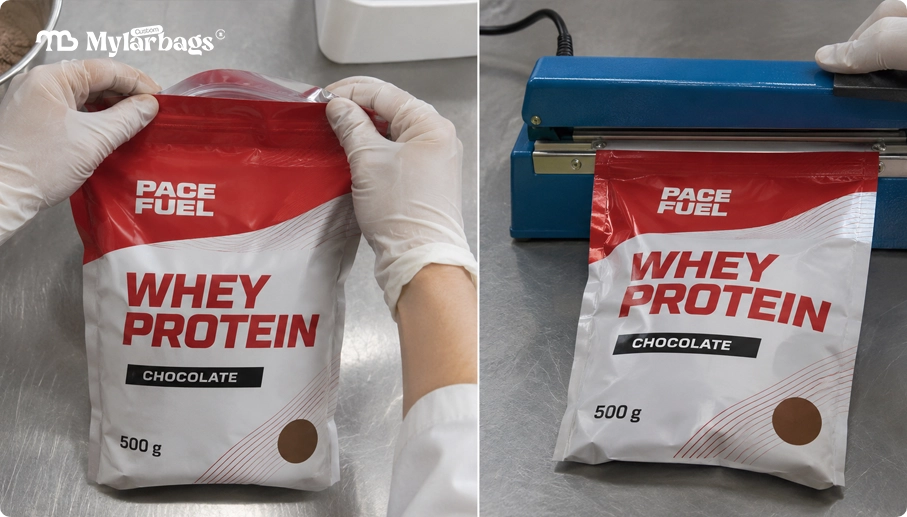
Seal most of the top edge using a heat sealer. Press the excess air out and finish sealing the remaining opening of the bag. Make sure the heat seal is above the resealable zipper.
Store in Cool, Dry Conditions
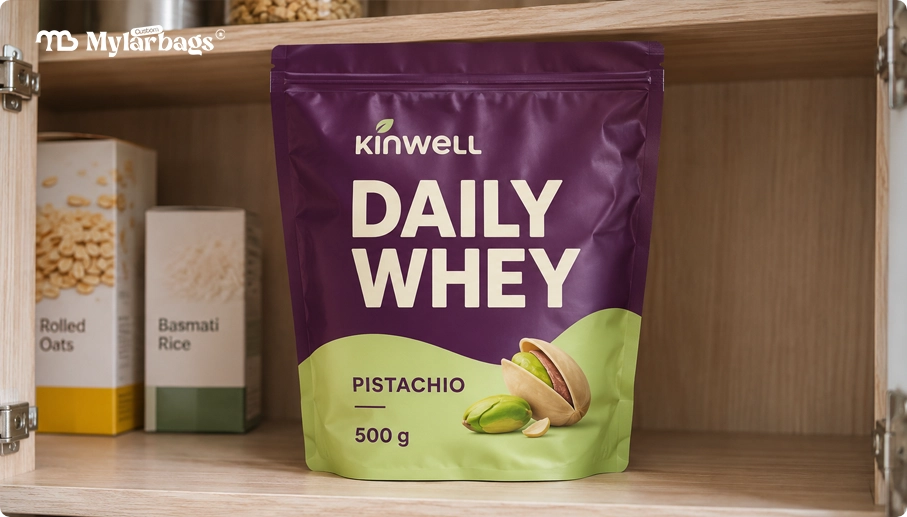
Store your protein powder mylar bag in a dark, cool, and dry place. Avoid storing it in the refrigerator, as it can cause condensation and clumping.
Choosing the Right Packaging Size for Your Storage Needs
Choosing the right Mylar bag size helps match fill weight to pouch capacity while leaving clean headspace for sealing. Match the bag's usable interior capacity to your product's volume and shape while leaving 2 to 3 inches of headspace for sealing.
Match pouch size to fill weight and powder density. The best approach is to request a sample kit from your supplier for the intended bag size to perform a fill test before full production.
Here are some of the most common mylar bag sizes:
Use case | Typical fill weight | Format |
Sample or trial size | 1 to 2 oz (about 25-50 g) | Three-side-seal pouch or small stand-up pouch |
Retail single tub replacement | 1 lb (about 454 g) | Stand-up pouch with zipper |
Retail standard size | 2 lb (about 907 g) | Stand-up pouch with zipper |
Multi-serving | 5 lb (about 2.27 kg) | Stand-up or gusseted pouch with zipper |
Final Thoughts
Protein powder mylar bags are designed to keep whey fresh even after opening multiple times. Their multi-layer barrier films and resealable closures help block environmental factors. They help protect protein powder from its hygroscopic nature and prevent clumping and nutrient degradation.
For best shelf-life retention, store the pouches in a dry area below 77°F (25°C). Make sure that moisture cannot get into the packaging at any cost. Avoid leaving scoops in the bag, as they introduce moisture and contaminants. Reach out to Custom Mylar Bags and order durable and high-barrier protein powder packaging bags.
FAQs
How long does protein powder last?
Unopened whey protein carries a 1 to 2 year shelf life set by the manufacturer, and a high-barrier, resealable Mylar pouch helps protect that quality after opening.
Can whey protein powder go bad if it is not stored properly?
Yes. When whey is exposed to moisture, heat, light, and air, it can cause clumping, off-flavors, and nutrient loss before the printed expiration date.
Can I store protein powder mylar bags in the refrigerator?
No. You should not store protein powder in Mylar bags in the refrigerator. Refrigeration causes condensation. It adds moisture and leads to clumping.
Why are Mylar bags a better choice than plastic tubs for whey protein?
Mylar bags feature a metallized or foil barrier with a resealable zipper. They provide stronger protection against moisture, oxygen, and light than most plastic tubs.

Sophia Bennett
Sophia Bennett is a flexible packaging consultant and content contributor at Custom Mylar Bags. With years of experience in packaging materials, printing techniques, and product protection, she writes about Mylar bag innovations, custom packaging trends, and practical solutions that help businesses improve product safety, freshness, and brand presentation.
Up Next