From Apparel to Electronics: Industries Benefiting Most from Bubble Mailers
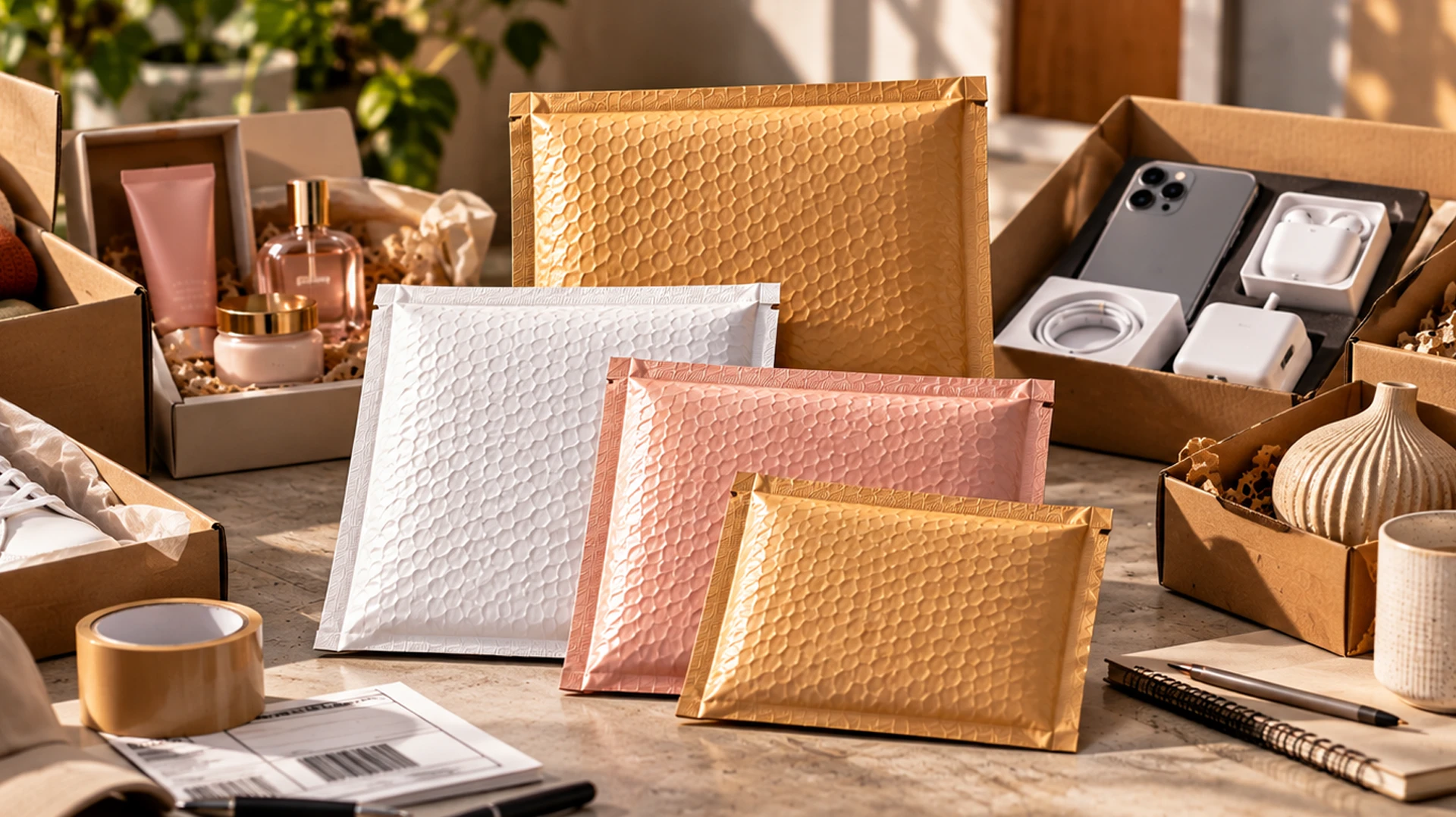
Online shopping keeps growing every year and there are no chances of it to ever slow down. As more and more orders are being sent from source to destination, businesses are in a dire need of packaging that is protective, light, and easy to use.
Market reports show that mailer and padded mailer use is rising quickly as e-commerce grows. Their demand in the USA is expected to rise at a 6.4% CAGR to $4.5 billion in 2030.
Bubble mailers tick many boxes at once. They:
Protect products
Keep packages small and light
Are simple for teams to pack and store.
Because of this, many different industries now use bubble mailers as a standard choice, from clothing brands and beauty companies to electronics sellers and book shops.
What Bubble Mailers Are and Why They Work for Many Products
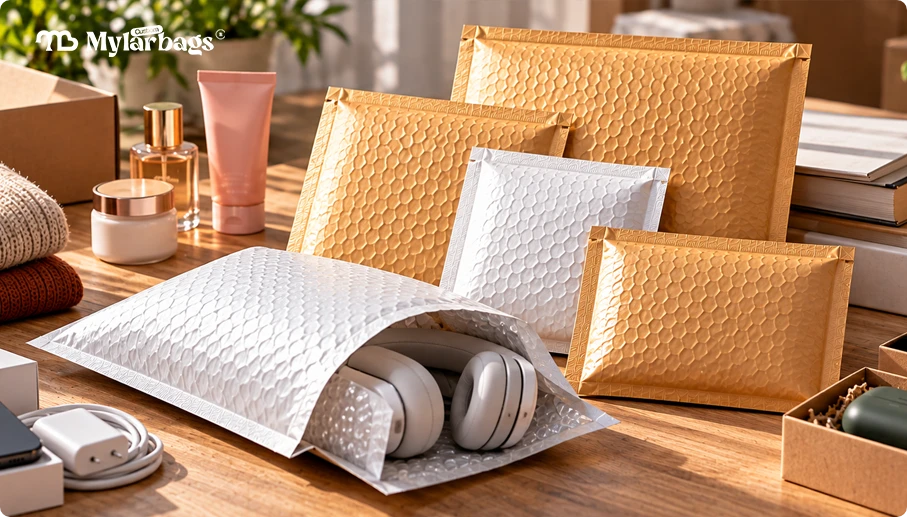
A bubble mailer is a padded envelope. It has an outer layer made from plastic or paper, and an inner layer of small air bubbles that act like tiny cushions.
You put a product inside, peel off the tape strip, press the flap, and it is sealed. There is often no need for extra filler like loose bubble wrap or packing peanuts.
Bubble mailers work for many products because they offer:
Protection: the bubbles absorb bumps and drops in transit.
Low weight: they are lighter than most boxes, which helps control shipping costs.
Flexible shape: they bend and wrap around the product, so you do not need a perfect-size box every time.
This mix of safety and efficiency is why so many B2B businesses now include bubble mailers in their standard packaging mix.
Apparel and Fashion: Shipping Clothes and Accessories Smartly
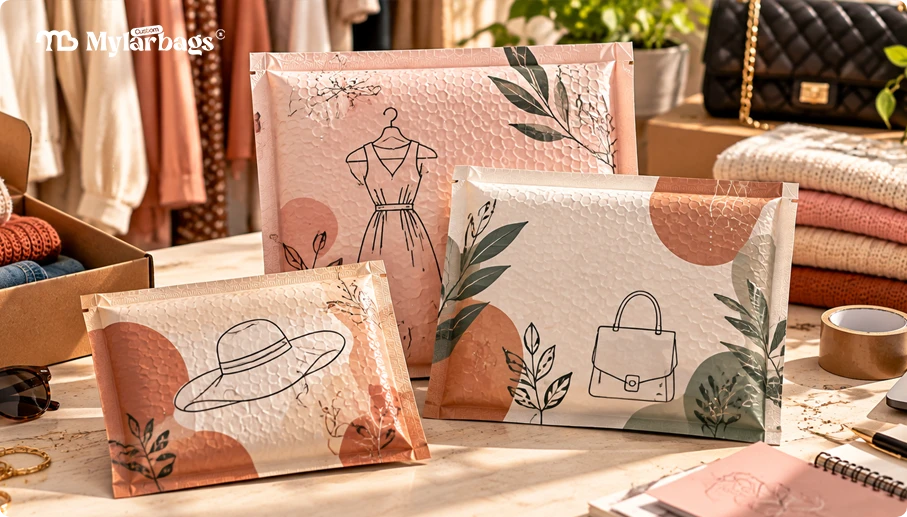
The fashion and apparel industry is and will be a big user of mailers. Large scale brands and marketplaces send clothing in poly mailers and padded envelopes because they are lighter and cheaper than boxes for soft items.
Bubble mailers show up in apparel and fashion when brands want a bit more padding or structure than a plain poly bag. They are especially useful for:
T-shirts, tops, and small clothing items that need to look neat.
Scarves, hats, and soft accessories.
Belts, wallets, and small boxed fashion pieces.
For many of these items, a full box is not needed all the time and a thin mailer can feel too flimsy. Therefore, bubble mailers are preferred as they give:
A more solid feel in the hand.
Extra protection for small hardware, like buckles or metal trims.
A neater look on arrival, with fewer wrinkles than very thin bags.
E-commerce sellers and brand warehouses like them because they are quick to pack, easy to store in bulk, and keep weight and size under control.
Beauty, Cosmetics, and Personal Care: Protecting Small Delicate Items
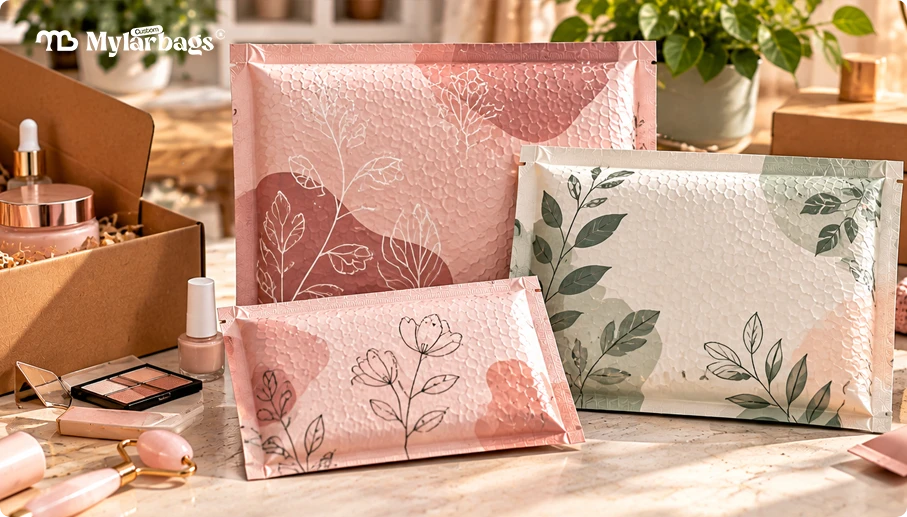
Beauty and personal care products are another major area for padded mailers. Market research notes that padded mailers are widely used to ship cosmetics and small personal care items. These products often come in small boxes, tubes, or jars that can dent or crack if they are not packed well.
Bubble mailers work well here for:
Boxed skincare sets.
Makeup palettes and brushes.
Small bottles, jars, and tubes that already have decent inner packaging.
These items are usually small and not extremely heavy, so the cushioning from the bubble layer is enough for many shipping routes. Bubble mailers:
Keep the outer boxes from getting scuffed.
Help reduce cracks and leaks caused by bumps.
Reduce the need for extra filler inside a larger carton.
Brands also like that bubble mailers can be printed or paired with branded stickers, so they still feel on-brand while keeping shipping costs low.
Electronics and Tech Accessories: Keeping Small Devices Safe
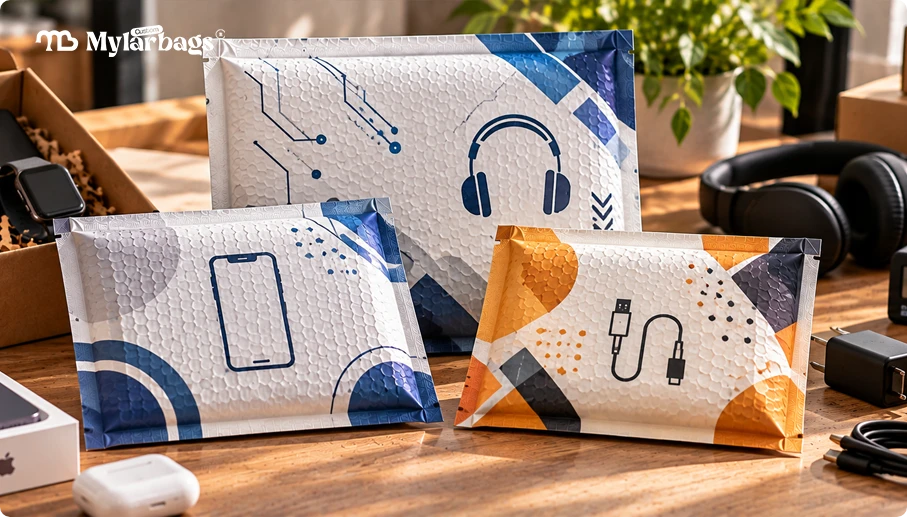
Electronics and tech accessories have one of the cleanest fits inside bubble mailers. Reports on padded mailers mention electronics accessories as a key use case. These products are often small but can break and get compromised if dropped.
Common items that tech and electronics brands send in bubble mailers include:
Cables, chargers, and adapters.
Phone cases and small gadget covers.
Earbuds and small headphones in retail boxes.
Small parts, tools, and components like USB sticks or add-on modules.
Bubble mailers are a good middle point for these products because:
Thin poly mailers may not protect them enough from shock.
Full boxes with filler can be heavier and more expensive to ship than needed.
The bubble layer cushions the product while the outer layer protects it from dust and light moisture. Many electronics sellers use anti-static bags or inner wraps for sensitive parts, then place those bags inside bubble mailers for extra safety.
Books, Media, and Educational Products: Stopping Bends and Dents
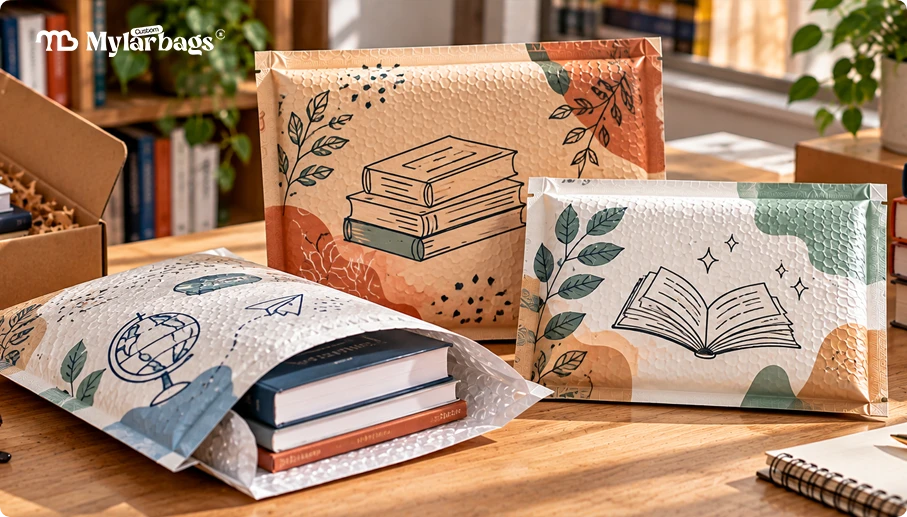
Books and media items also benefit a lot from bubble mailers. Market research lists books and similar media items as common products for padded mailers. These products do not shatter easily, but they can bend, crease, or get scuffed in transit.
Bubble mailers help:
Stop corners from getting bent when a book hits something.
Reduce rubbing that can damage covers.
Keep DVDs, games, and small educational kits snug during shipping.
Publishers, educational sellers, and online bookstores often choose padded envelopes for single-book or small-order shipments because they:
Are faster to pack than boxes.
Keep postage lower compared to a rigid box for one book.
Offer enough protection for normal mailing conditions.
Some sellers add a simple cardboard stiffener inside the bubble mailer to keep items extra flat. This combination balances cost and safety well.
Health, Pharma, and Small Medical Supplies: Light but Protected
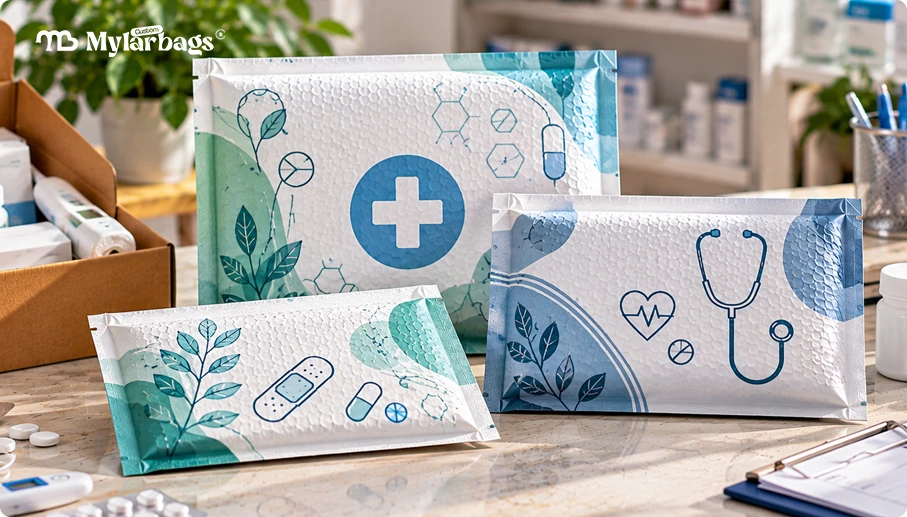
Health and pharma companies also use padded mailers for certain products. Reports list pharmaceuticals and small health items among the common uses for padded mailers.
These can include:
Small over-the-counter medicine boxes.
Sample packs.
Light medical devices and accessories (for example, braces, strips, small tools) that are not extremely fragile.
In this field, packaging must be:
Clean and intact on arrival.
Secure enough to avoid tampering.
Protective enough to prevent crushed cartons and broken seals.
Bubble mailers help by:
Giving enough cushioning for small boxes and devices.
Keeping weight low, which helps with shipping cost, especially for regular sample or kit mailings.
Allowing easy sealing; many mailers can also take security labels or tamper-evident tape.
Very fragile medical devices or temperature-sensitive medicines still need special rigid or insulated packaging, but for many smaller, non-critical items, bubble mailers are a practical everyday choice.
Jewelry, Gifts, and Small Home Goods: Balancing Safety and Presentation
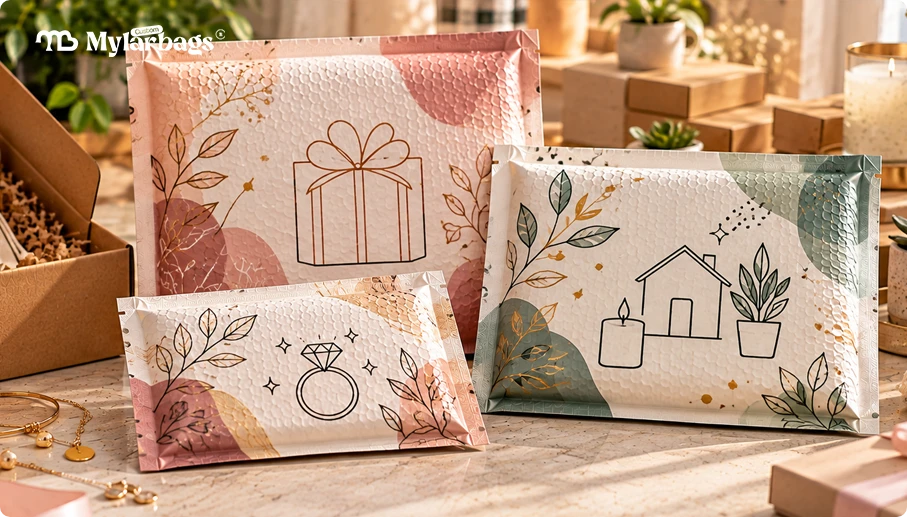
Jewelry and small consumer goods rely too much on bubble mailers, especially in a small-business setting. Ongoing trend shows that bubble and padded mailers are widely used to pack a variety of jewelry and small sized items.
Some examples of such products include:
Rings, earrings, and necklaces in small boxes or pouches.
Keychains, pins, and charms.
Small candles and decor items in inner boxes.
Gift items like mini frames or small keepsakes.
These products need:
Enough protection to avoid scratching, chipping, or crushed gift boxes.
Packaging that feels like a gift, not like a random industrial shipment.
Bubble mailers support both needs. They:
Protect the inner box or pouch with a layer of bubbles.
Can be printed in colors, patterns, or with branding that looks fun or premium.
Help small gift and jewelry brands keep shipping light while still creating a nice unboxing moment.
Many small B2B sellers choose bubble mailers because they can use one type of outer pack for many different small SKUs.
Why Bubble Mailers Make Sense across So Many B2B Verticals
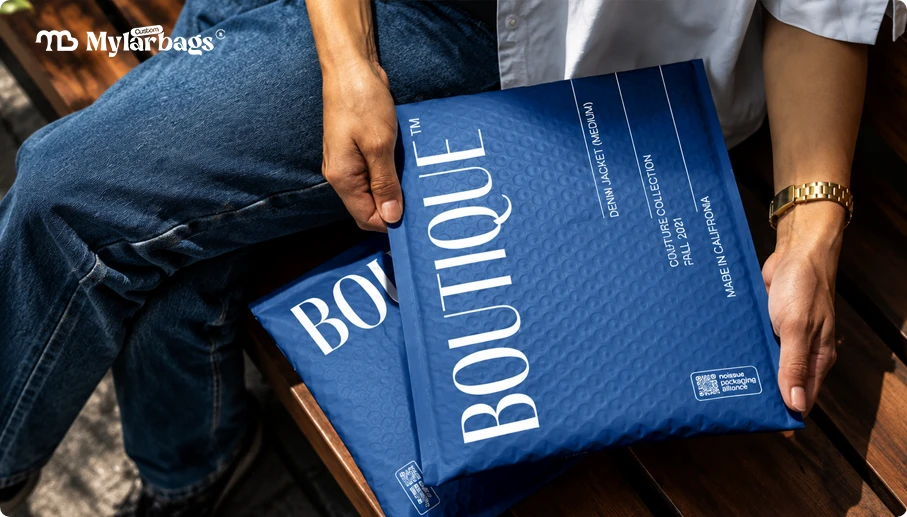
Looking across these industries like apparel, beauty, electronics, books, health, and jewelry, certain patterns repeat. These sectors all need packaging that:
Protects small and semi delicate items from normal bumps and drops.
Keeps parcels light and compact to control shipping and handling costs.
Packs quickly and does not take up too much space in warehouses or back rooms.
Bubble mailers meet these shared needs. That is why industry reports say cushioned mailers are growing quickly, especially for electronics, cosmetics, books, jewelry, and small consumer goods.
For plenty of B2B shippers, this means bubble mailers are not just a niche tool. They are a standard, flexible option that can be used across many industries as long as product size and fragility match.
We have also put forth a guide for how to negotiate if you are looking to buy wholesale bubble mailers.
How to Match Bubble Mailers to Your Industry (Simple Steps)
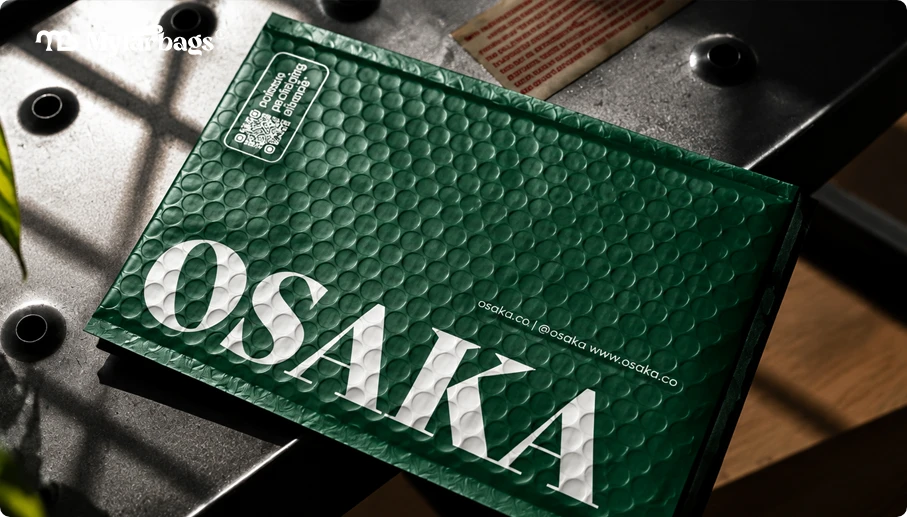
If you run a B2B brand or supply other businesses, here is an easy way to decide how bubble mailers fit your world.
Step 1: Look at your product list
Mark all items that are small and light.
Mark items that can bend, scratch, or dent but are not extremely fragile.
These are the first items which should be packed in bubble mailers.
Step 2: Check how you ship them now
Do you use boxes that are half empty?
Do you use thin mailers that sometimes lead to damage?
Are shipping costs high compared to the value of the item?
If yes, bubble mailers may solve more than one problem at once.
Step 3: Test sizes and strengths
Try a few bubble mailer sizes with your key products.
Make sure items fit without bending and seams stay strong.
For heavier items, pick thicker mailers.
Step 4: Decide where boxes are still needed
Remember that:
Very fragile, heavy, or high-value items still need proper boxes and inner padding.
Bubble mailers are best for small items that need medium protection, not for everything.
Step 5: Work with a packaging partner
A supplier like us is surefire way to help you:
Match industries (apparel, beauty, electronics, etc.) to suitable mailer types and sizes.
Choose between plastic and paper bubble mailers.
Add custom printing so your mailers carry your brand into every shipment.
This way, you can use bubble mailers where they truly help and keep other packaging for products that need more.
Frequently Asked Questions
In what industries are bubble mailers the most popular?
According to plenty of reports and studies, electronics accessories, cosmetics, books, jewelry, and small consumer goods are major users of padded as well as bubble mailers. Apparel and e-commerce retailers also use bubble mailers for their small and sometimes semi delicate items that can go by without needing a box.
Are bubble mailers perfect for fragile products like big glass items?
While bubble mailers are the best choice for small to medium size items that need medium protection to ship safely to the destination. They are not suitable for delicate or larger glass items because these products need to be packed in strong boxes with extra inner padding instead of a bubble mailer.
Why do fashion and apparel brands sometimes choose bubble mailers instead of plain poly mailers?
Bubble mailers give more structure and protection than plain poly mailers. This helps to protect small hardware and keeps garments or accessories looking neat on arrival.
How do bubble mailers help electronics brands?
For electronics accessories and small devices, bubble mailers provide extra cushioning without the weight and bulk of boxes, which helps control shipping costs and protects items from normal bumps.
Can one company use bubble mailers for several product lines?
Yes. Bubble mailers are versatile and can handle a wide range of small and medium products, from handmade crafts to small electronic devices, which lets companies simplify their packaging lineup.

Sophia Bennett
Sophia Bennett is a flexible packaging consultant and content contributor at Custom Mylar Bags. With years of experience in packaging materials, printing techniques, and product protection, she writes about Mylar bag innovations, custom packaging trends, and practical solutions that help businesses improve product safety, freshness, and brand presentation.
Up Next